



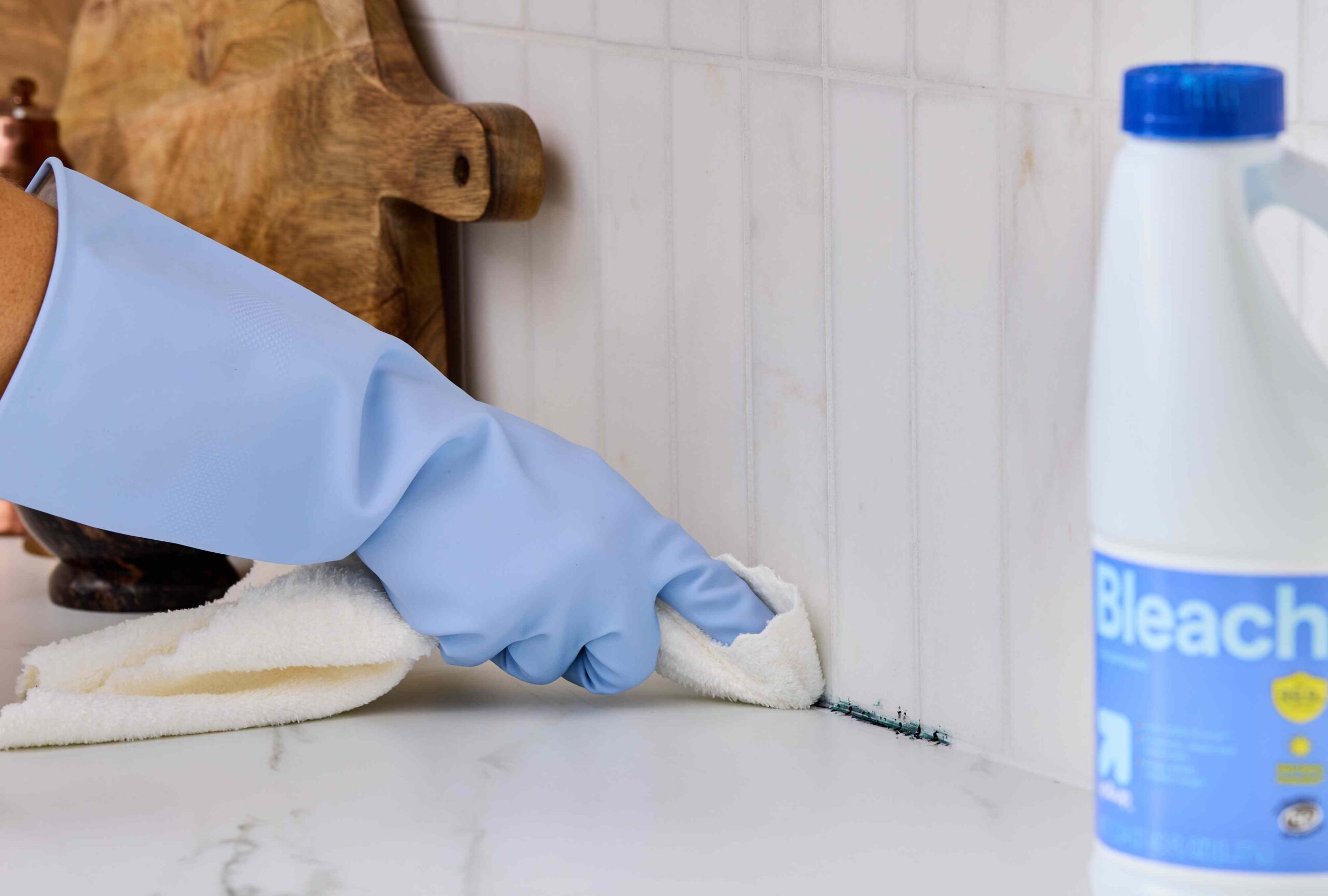
Mold is a common household problem that can develop in bathrooms, kitchens, basements, laundry rooms, and other areas exposed to moisture. It often appears as dark spots, fuzzy patches, or discolored areas on walls, ceilings, floors, and household fixtures. Because bleach is widely available and commonly used for cleaning, many homeowners turn to it when they discover mold. However, although bleach can remove certain visible mold stains, it is not always an effective solution for eliminating mold growth.
Understanding how bleach works, which surfaces it can safely clean, and when professional treatment is necessary can help homeowners avoid ineffective cleaning methods and recurring mold problems.
How Does Bleach Affect Mold?
Household chlorine bleach contains sodium hypochlorite, a chemical that can disinfect certain surfaces and remove stains. When applied appropriately, it can kill susceptible mold on some nonporous materials and improve the appearance of stained surfaces.
However, removing visible discoloration does not necessarily mean that all mold has been eliminated. Mold can grow beneath surface coatings, inside porous materials, and in hidden spaces where bleach cannot penetrate effectively.
Another important consideration is that mold growth is usually connected to excess moisture. Even if bleach removes visible mold, the problem may return if a plumbing leak, condensation issue, or ventilation problem remains unresolved.
Can Bleach Remove Mold From Bathroom Surfaces?
Bathrooms are particularly vulnerable to mold because showers, bathtubs, sinks, and surrounding walls frequently experience moisture and humidity. Mold may appear along grout lines, around faucets, on shower doors, and near bathroom ceilings.
Bleach can be useful for cleaning certain nonporous bathroom surfaces when used according to the manufacturer’s instructions. It may also remove some discoloration from suitable materials. However, it is less dependable when mold has penetrated porous grout, damaged caulking, or underlying building materials.
For recurring bathroom mold, homeowners should investigate ventilation problems, leaking fixtures, and areas where water regularly collects.
Using Bleach on Kitchen Surfaces
Kitchens contain several surfaces that may occasionally develop mold, especially around sinks, countertops, cabinets, and refrigerators. Food particles, spills, and persistent moisture can create favorable conditions for mold growth.
Bleach may be appropriate for certain nonporous surfaces, provided the product label permits that application. Before cleaning, food, utensils, and other kitchen items should be removed from the affected area.
Porous materials, including wooden cabinets and particleboard, require additional attention. Mold can penetrate these materials, making surface cleaning insufficient. If contamination has spread into the material, replacement or specialized remediation may be necessary.
Does Bleach Work on Drywall and Painted Walls?
Drywall is a porous building material that can absorb moisture and support mold growth. When mold develops on drywall, the contamination may extend beyond the visible surface and into the paper facing or interior material.
Applying bleach to affected drywall is generally not recommended as a complete mold-removal strategy. The liquid may fail to reach mold growing inside the material, while adding moisture can make the situation worse.
Painted walls can sometimes be cleaned if the mold is limited to the surface and the underlying material remains unaffected. However, extensive growth, damaged paint, soft drywall, or recurring discoloration may indicate a deeper moisture problem.
Why Bleach Is Not Always the Best Mold Removal Solution
Although bleach has a place in household cleaning, it has several limitations when used against mold.
Limited penetration: Bleach solutions do not reliably penetrate porous materials such as drywall, untreated wood, carpeting, and insulation.
Surface discoloration: Bleach can lighten visible mold stains without necessarily removing all underlying fungal growth.
Additional moisture: Applying liquid to already damp materials can contribute to moisture-related problems.
Material damage: Strong bleach solutions can discolor fabrics, damage finishes, corrode certain metals, and affect sensitive household materials.
Chemical safety concerns: Bleach can release hazardous gases when mixed with incompatible cleaning products.
These limitations explain why bleach should not be considered a universal solution for household mold problems.
Safer Ways to Clean Small Areas of Mold
For small areas of mold on suitable hard surfaces, careful cleaning may be possible without using harsh chemicals. The correct method depends on the material and the extent of contamination.
Homeowners can follow several basic precautions:
- Wear appropriate protective gloves and eye protection.
- Improve ventilation without spreading mold into unaffected areas.
- Clean suitable hard surfaces using detergent and water.
- Dry the cleaned area completely.
- Discard heavily contaminated porous materials when they cannot be effectively cleaned.
- Address leaks, condensation, and other sources of moisture.
Never mix bleach with ammonia, vinegar, acids, or other household cleaners. These combinations can produce dangerous gases. Always follow product instructions and keep children and pets away from cleaning chemicals.
When Should You Avoid Cleaning Mold Yourself?
Not every mold problem is suitable for household cleaning. Large affected areas, extensive water damage, recurring growth, and contamination inside walls or ventilation systems may require professional assessment.
Homeowners should also consider professional assistance when mold affects heating and cooling equipment or when the source of moisture cannot be identified.
People with asthma, allergies, respiratory conditions, or weakened immune systems should avoid disturbing mold and seek appropriate assistance rather than attempting extensive cleanup themselves.
Professional remediation can involve identifying moisture sources, containing affected areas, removing contaminated materials, cleaning appropriate surfaces, and verifying that the underlying conditions have been addressed.
The Importance of Professional Mold Removal
Professional mold removal involves more than treating visible spots with a cleaning solution. A thorough approach begins with understanding why mold developed and determining how far the contamination has spread.
Experienced specialists can assess affected building materials, identify potential moisture sources, and recommend suitable cleaning or removal methods. They may also use containment procedures to reduce the movement of mold-contaminated dust during remediation.
Homeowners researching mold removal services beltsville md should look for qualified providers who explain their inspection process, remediation methods, safety precautions, and moisture-control recommendations. Choosing a service based on a clear assessment rather than promises of a quick chemical treatment can help prevent recurring problems.
How to Prevent Mold From Returning
Preventing mold requires controlling moisture throughout the home. Even effective remediation may not provide lasting results if damp conditions remain.
Homeowners can reduce the likelihood of future growth by following these practices:
Control indoor humidity: Keep indoor relative humidity below 60%, ideally between 30% and 50%, when practical. Dehumidifiers can help in damp basements and other moisture-prone spaces.
Repair leaks promptly: Fix leaking pipes, roofs, windows, and plumbing fixtures before water damages surrounding materials.
Improve ventilation: Use bathroom exhaust fans and kitchen ventilation systems to remove excess moisture.
Dry wet materials quickly: Address water spills and wet building materials promptly, ideally within 24 to 48 hours.
Inspect vulnerable areas: Regularly check under sinks, around windows, behind appliances, and in basement corners for signs of moisture.
These preventive measures make the home less favorable to mold growth and help protect building materials.
Final Thoughts
Bleach can remove certain mold stains and help disinfect suitable nonporous household surfaces, but it is not a reliable solution for every mold problem. Its effectiveness depends on the material, the extent of contamination, and whether mold has penetrated beneath the visible surface.
For small, manageable problems, appropriate cleaning methods and moisture control may be sufficient. However, extensive contamination, recurring mold, and growth inside porous materials often require professional attention.
The most effective approach is to address both the visible mold and the conditions that allow it to grow. By understanding the limitations of bleach and taking preventive measures, homeowners can maintain cleaner indoor spaces and reduce the risk of mold returning.
