




Life after a stroke can bring a complex mix of emotions and practical challenges. While hospital rehabilitation lays vital groundwork, much of the recovery journey unfolds at home. Stroke home care offers compassionate and tailored support to help survivors regain confidence and independence in familiar surroundings.
Understanding Stroke Home Care
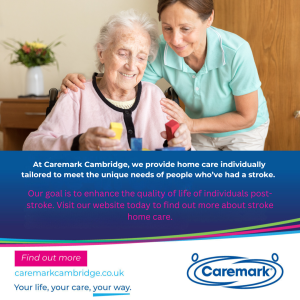
At Caremark Cambridge & South Cambridgeshire, Stroke Home Care is one of the many specialist services provided to support individuals in the comfort of their own homes.
These services may include:
- Personal care and mobility assistance – helping with washing, dressing, transfers, and movement around the home.
- Medication management – ensuring timely reminders and assistance with medicines.
- Meal preparation and nutrition – helping with healthy, appetising meals that support recovery.
- Companionship and emotional support – alleviating isolation and fostering engagement through meaningful social interaction.
- Live-in care and/or scheduled visits – depending on personal needs, from hourly support during the day to round-the-clock live-in care.
Why Stroke Home Care Matters
Smooth transition from hospital to home
NICE guidelines emphasise the importance of specialist stroke services, which include early supported discharge (ESD) and continuity of care through community teams. They recommend a comprehensive stroke home care cambridge plan before discharge and a follow-up from a stroke rehabilitation team within 72 hours to ensure the home environment is safe and suitable.
Rehabilitation and goal-oriented support
For effective recovery, rehabilitation should be multidisciplinary—encompassing physiotherapy, speech and language therapy, and occupational therapy—delivered at least five days a week for around three hours a day when possible. Stroke home care enables these therapies to be easier to integrate into daily routines.
Emotional, psychological, and cognitive care
Stroke doesn’t only affect physical ability—changes in mood, cognition, communication, fatigue, and vision are common. NICE advises regular assessment and support for these areas, with tailored interventions to help stroke survivors and their carers adapt emotionally and psychologically.
Safe, supportive home life
Adapting the home environment can significantly ease daily living—simple adaptations like grab rails or mobility aids can make a big difference. Carers can also help supervise activities to reduce the risk of falls or complications.
What to Expect from Caremark Cambridge & South Cambridgeshire
Caremark provides a wide spectrum of home care services, including stroke care. As part of the Cambridge & South Cambridgeshire services, stroke home care is delivered by trained care assistants who are selected and extensively trained to offer compassionate, person-centred care.
Whether provided through scheduled visits or live-in arrangements, the goal is to ensure continuity, dignity, and the highest possible quality of life for stroke survivors as they navigate recovery at home.
Want to Learn More?
For further details on how Caremark Cambridge & South Cambridgeshire offers stroke home care—and to explore arrangements like live-in care, meal support, medication management, or mobility assistance—you can visit their [Care Services in Cambridge] page. This is where they outline their specialist services across a range of neurological and physical needs, including stroke care and live-in support.
Summary: Key Benefits of Stroke Home Care
| Benefit | How It Helps Recovery |
| A tailored, safe home setting | Reduces fall risks and supports mobility adaptations |
| Integrated rehabilitation | Boosts recovery speed through therapy at home |
| Continuity and emotional support | Eases transition and helps manage emotional strain |
| Medication and health oversight | Ensures timely care and supports independence |
| Flexible care options | From hourly visits to live-in arrangements |
Stroke home care offers more than practical help—it offers hope, confidence, and a pathway back to normal life.
