



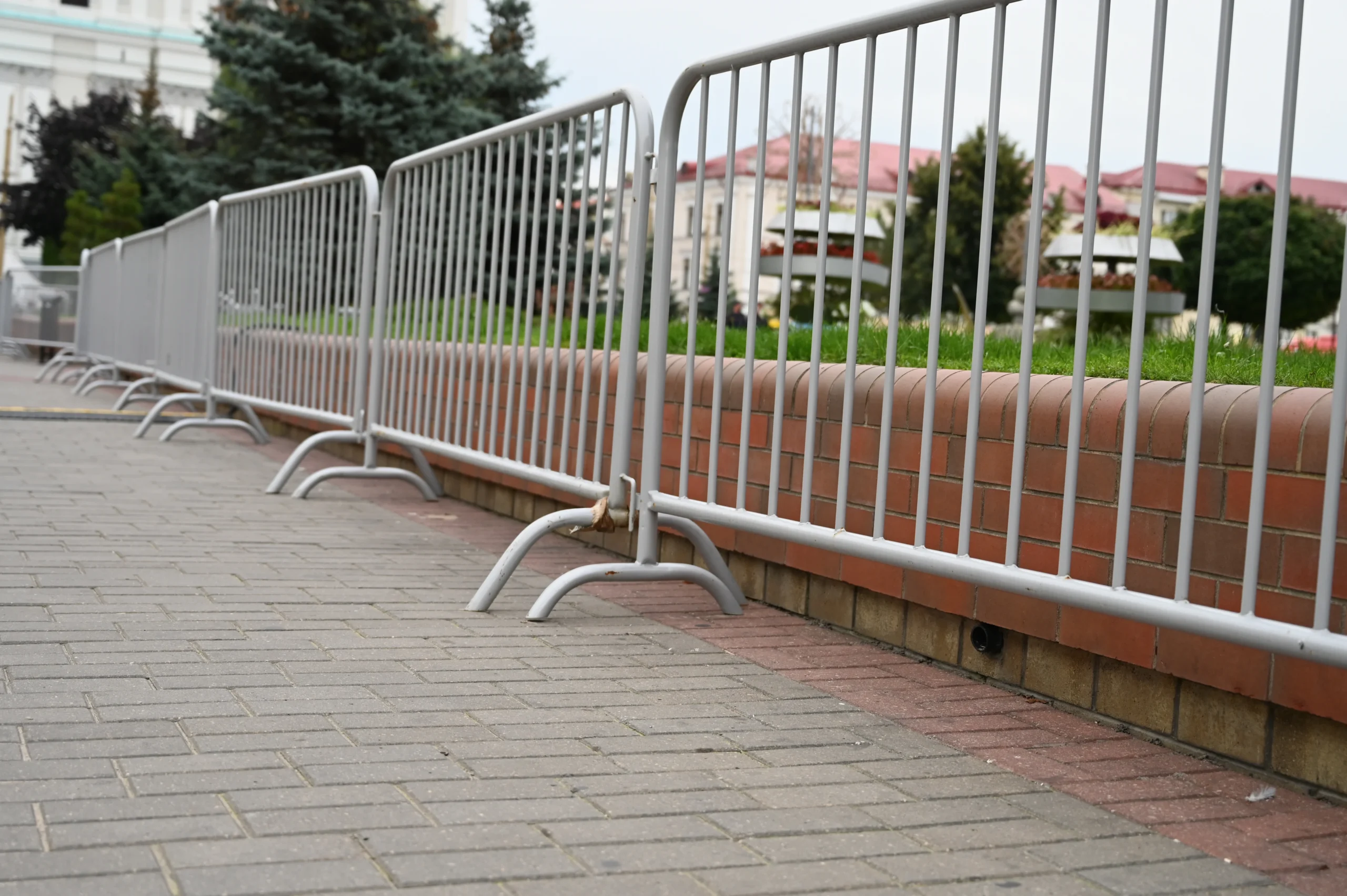
Large public gatherings require careful planning to keep pedestrian movement organized and reduce confusion around entrances, exits, restricted areas, and high-traffic zones. From concerts and festivals to parades, sporting events, and municipal gatherings, physical barriers can help define where people should walk, wait, or avoid entering. For organizers managing busy environments, steel barricades provide a practical way to create visible boundaries while supporting orderly crowd movement.
Why Crowd Control Planning Matters
Crowd management begins long before guests arrive. Organizers need to consider expected attendance, venue layout, emergency access, queue locations, staff positioning, and areas that may require restricted entry.
Without clearly marked boundaries, people may gather in unintended locations, block walkways, enter staff-only zones, or create congestion around ticket checkpoints and gates.
Physical barricades give attendees a clear visual signal about where they should stand or move. They also help staff maintain consistent traffic patterns instead of relying entirely on verbal directions.
This becomes particularly important at large events where thousands of people may be moving through the same location within a short period.
Common Uses for Steel Crowd Barricades
Steel crowd barriers can be used across many types of public spaces and events.
Event planners commonly position them around entrances and ticketing areas to create organized lines. Concert and festival organizers may use them to separate pedestrian zones from equipment areas, production spaces, or temporary roadways.
Municipal agencies can also use crowd barriers during parades, public celebrations, street fairs, and civic gatherings. Security teams may position barriers around restricted areas or checkpoints where access needs to be controlled.
Other common applications include:
- Sporting event entrances
- Outdoor concerts
- Festivals and fairs
- Political and civic gatherings
- Construction-adjacent pedestrian routes
- Convention centers
- Transportation hubs
- Temporary security perimeters
Because these settings vary considerably, barrier placement should always be planned according to the specific venue and expected crowd behavior.
Why Steel Is Commonly Used for Crowd Barriers
Steel is widely used for temporary crowd barriers because it provides a solid physical boundary while remaining suitable for repeated event use.
Unlike lightweight visual markers, steel barriers create a noticeable separation between public and restricted areas. Their construction also makes them suitable for locations where equipment may be installed, moved, stored, and reused frequently.
For event companies that work across several venues, reusable barriers can also make it easier to maintain a consistent crowd-control setup from one event to another.
Visibility is another important factor. Guests can quickly recognize a continuous barrier line, making it easier for them to understand where queues begin, which routes are open, and which spaces are closed.
Plan Barrier Placement Before Guests Arrive
Simply having barriers available does not guarantee good crowd flow. Placement plays a major role in how well the setup works.
Organizers should first identify major movement points, including entrances, exits, registration areas, food and beverage zones, restrooms, transportation pickup points, and emergency routes.
Barricades should then be arranged to direct movement without creating unnecessary bottlenecks.
For example, placing barriers too close together near an entrance can compress a crowd into a narrow space. On the other hand, leaving too much open space around a queue may encourage people to form additional unofficial lines.
Event teams should walk through the planned layout before opening the venue and view the space from an attendee’s perspective.
Avoid Blocking Emergency Access
One of the most important considerations when using any physical crowd barrier is emergency access.
Fire lanes, emergency exits, medical access routes, and service roads must remain available according to applicable venue rules and local requirements.
Event planners should coordinate with venue managers, security staff, and local authorities when determining where barriers can be positioned.
It is also useful to create clearly identifiable openings where authorized personnel can move quickly if necessary.
These openings should be understood by staff before the event begins so there is no confusion during an emergency.
Match the Barrier Setup to Crowd Behavior
Different events create different movement patterns.
A concert may have heavy traffic before gates open and again immediately after the performance ends. A festival may experience steady movement between stages, food areas, and activity zones throughout the day.
A parade may require long stretches of barriers along a route, while a conference may need shorter sections around registration desks and restricted entrances.
Understanding these patterns helps organizers decide where barriers are most important and how many sections may be required.
Staff should also monitor crowd behavior during the event. If congestion begins forming in an unexpected location, the layout may need to be adjusted where safe and appropriate.
Choosing Crowd Control Equipment
Before selecting equipment, organizers should consider event size, venue conditions, setup requirements, storage needs, and expected frequency of use.
For organizations that manage recurring events, choosing equipment intended for repeated installation can be particularly useful. Municipalities, venues, event production teams, and security companies may all benefit from keeping dependable crowd-control hardware available for different types of gatherings.
It is also worth considering how barriers will connect, transport, and fit within the available space.
The right equipment should support the broader crowd-management plan rather than being treated as a standalone safety measure.
Build a Clear Crowd Management Plan
Large gatherings are easier to manage when guests can immediately understand where they should walk, wait, and enter. Well-positioned barriers can help create those visual boundaries while supporting staff responsible for security and guest movement.
Organizations preparing for concerts, festivals, municipal events, sporting events, or other public gatherings can review crowd-control equipment from Epic Crowd Control when planning their next event setup.
