



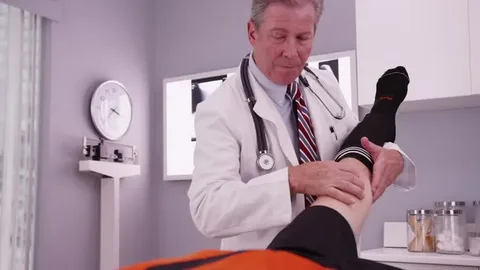
Recovery after injury often depends on more than rest and time alone. Alignment of bones, joints, and soft tissue determines how well the body heals and how safely movement can return. A structured approach guided by medical expertise allows injured athletes and active individuals to regain balance, strength, and function without creating new problems.
Physical Manipulation to Reposition Displaced Joints
Joint displacement disrupts normal movement patterns and places stress on surrounding tissue. A sports medicine doctor evaluates the position of the joint through physical assessment and imaging before applying controlled manual techniques to guide it back into proper alignment. These adjustments are precise and calculated, focusing on restoring natural joint spacing rather than forcing movement. Manual repositioning often reduces pain by relieving pressure on nerves and cartilage. Once alignment improves, surrounding muscles can relax and begin functioning correctly again. For patients searching for a sports medicine doctor near me, this hands-on correction is often one of the earliest steps toward restoring normal movement.
Orthopedic Bracing to Stabilize Bone Structures
After realignment, joints and bones require support to maintain their corrected position. Orthopedic bracing provides external stability while allowing limited movement that supports healing. These braces are selected based on injury type, location, and activity demands.
Stabilization helps prevent re-injury during daily movement or early rehabilitation. By controlling motion, braces reduce strain on healing tissue while promoting confidence in movement. Orthopedic sports medicine frequently relies on bracing as a bridge between injury correction and active rehabilitation.
Surgical Fixation Using Medical Plates and Screws
Severe fractures often require surgical intervention to restore anatomical alignment. Plates and screws hold bone fragments in precise positions, allowing them to heal together correctly. This method provides immediate structural stability that cannot be achieved through external support alone.
Surgical fixation also restores proper load distribution across the bone. Correct alignment prevents abnormal stress that can lead to arthritis or chronic pain later. A sports medicine doctor works closely with orthopedic surgeons to ensure alignment supports long-term joint health and function.
Precision Realignment Through Arthroscopic Guidance
Minimally invasive arthroscopic procedures allow doctors to correct alignment inside joints with small instruments and cameras. This technique provides direct visualization of cartilage, ligaments, and bone surfaces during correction. Precision matters, especially in joints like the knee, shoulder, and ankle.
Arthroscopic guidance reduces tissue disruption compared to open surgery. Faster recovery times and improved accuracy make it a preferred option for many alignment-related injuries. Orthopedic sports medicine often favors these techniques to preserve joint integrity while correcting mechanical issues.
Custom Orthotics to Correct Gait and Limb Posture
Alignment problems often originate below the injury site, particularly in the feet. Custom orthotics adjust how weight moves through the lower body, correcting gait patterns that pull joints out of position. These devices are molded to the patient’s anatomy rather than using generic inserts.
Improved posture during walking and running reduces repetitive strain on knees, hips, and the spine. Over time, corrected movement patterns allow bones and joints to maintain alignment naturally. Many patients visiting a sports medicine doctor near me benefit from orthotics as part of long-term injury prevention.
Targeted Muscle Strengthening to Pull Bones into Place
Muscles play a major role in joint alignment. Weak or imbalanced muscles can gradually pull bones out of position, even after successful correction. Targeted strengthening focuses on restoring balance between opposing muscle groups.
Rehabilitation programs emphasize control and coordination rather than brute strength. Strengthening the correct muscles helps maintain alignment during movement and reduces reliance on external supports. A sports medicine doctor designs these programs to match the patient’s activity level and recovery stage.
External Fixation for Complex Fracture Stabilization
Complex fractures sometimes require external fixation devices to maintain alignment during healing. These frames hold bones in position from outside the body while allowing access to soft tissue injuries. External fixation is often temporary but essential for severe trauma cases.
This approach allows gradual adjustments as swelling decreases and healing progresses. Alignment can be fine-tuned without repeated surgery. Orthopedic sports medicine specialists use external fixation when internal methods are not immediately appropriate.
Controlled Traction to Gradually Adjust Limb Length
Traction applies steady force to lengthen muscles and reposition bones over time. It is commonly used when misalignment involves limb shortening or joint compression. Controlled traction avoids sudden changes that could damage tissue.
Gradual adjustment encourages bones and soft tissue to adapt safely. This method supports proper alignment while minimizing discomfort. A sports medicine doctor monitors traction closely to ensure progress remains within safe limits.
Ligament Grafting to Restore Natural Joint Tension
Ligaments stabilize joints by controlling movement limits. When damaged, joints may shift out of alignment even if bones are intact. Ligament grafting restores tension that keeps joints properly positioned.
Reconstructed ligaments help joints move smoothly without excessive translation. Stability from grafting supports long-term alignment and reduces reinjury risk. Patients requiring advanced alignment correction often benefit from this surgical option as part of comprehensive care.
For individuals seeking advanced injury recovery and alignment-focused treatment, Dr. Boyett provides sports medicine services designed to restore structure, function, and confidence through personalized orthopedic care.
