



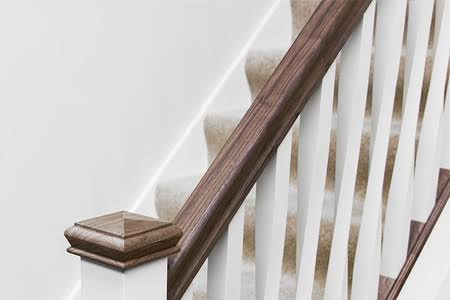
How to Choose the Right Wood Handrail for a Staircase Project
Choosing a stair handrail involves more than selecting a piece of wood that looks appropriate beside the stair treads. The rail must feel comfortable in the hand, match the surrounding components, suit the architectural style, and work with the intended baluster and newel post arrangement. Making these decisions early can help flooring dealers, contractors, installers, and designers prevent ordering errors and keep the project moving according to schedule.
Consider the Complete Stair System
A handrail is one part of a larger railing system. It connects visually and physically with balusters, newel posts, fittings, treads, risers, and nearby flooring. Each component should be considered before the rail is ordered.
For example, selecting a handrail profile without checking the available fittings can cause problems at turns, landings, or transitions. A fitting designed for one profile may not align correctly with another. Contractors should confirm that the required level quarter turns, up easings, goosenecks, volutes, or other fittings are available for the chosen rail.
Considering the complete system also helps designers create a consistent appearance from the first step to the upper landing.
Choose a Profile That Fits the Design
Handrail profiles influence both appearance and grip. Traditional profiles often include rounded edges and more detailed shapes, making them suitable for Colonial, Craftsman, and other classic interiors. Contemporary profiles tend to have cleaner lines and simpler forms that complement modern homes.
Scale matters as well. A smaller profile may appear balanced in a compact staircase, while a wider rail can provide the visual weight needed for a large entryway. The selected profile should also feel comfortable for everyday use.
When specifying a profile, contractors and designers should record its exact series or product number. This makes it easier to order corresponding fittings and replacement pieces if the project requirements change.
Understand Plowed and Non-Plowed Handrails
The planned baluster system will often determine whether the project requires a plowed or non-plowed handrail.
A plowed handrail has a routed channel along its underside. This channel is commonly used with square-top wood balusters. Fillet pieces fill the spaces between the balusters, creating a finished appearance.
A non-plowed handrail does not contain this channel. It may be selected for pin-top wood balusters, certain iron baluster arrangements, or other installation methods that do not require balusters to sit inside a routed opening.
Ordering the wrong configuration can require extra fabrication or a product replacement. Confirm the baluster shape, dimensions, spacing, and attachment method before finalizing the rail.
Coordinate the Wood Species and Finish
The handrail does not always need to be identical to the stair treads, but the materials should look intentional together. Red oak, white oak, and maple can differ noticeably in grain pattern, natural color, and the way each species accepts stain.
When the goal is a close match, samples should be reviewed under the lighting conditions of the finished room. Natural light, warm bulbs, and cool bulbs can each change how a stain color appears.
Designers may also specify contrast. A darker handrail paired with lighter treads can define the railing and introduce visual depth. In either case, the finish plan should be established before ordering the main components.
Measure Runs and Changes in Direction
Accurate measurements are essential when ordering handrail sections. Installers should document straight stair runs, level balcony sections, landings, transitions, and changes in direction. The plan should account for cuts, fitting connections, and any additional material needed for job-site adjustments.
Curved staircases require special planning. A bending rail must follow the staircase radius and match the profile used on straight sections. These projects may also require templates, additional labor, and careful coordination between the installer and supplier.
It is better to verify measurements before ordering than to assume a standard rail length will cover every section.
Confirm Component Compatibility
Before placing an order, review the handrail alongside every connected component. Confirm the profile number, wood species, plow dimensions, baluster style, newel post arrangement, fittings, rail length, and finish.
Flooring dealers and retailers can help customers by gathering these details at the beginning of the sales process. Contractors can use the same information to prepare accurate material lists and reduce last-minute substitutions. Architects and interior designers can include profile and finish details in project specifications so every party works from the same plan.
Plan the Handrail Before Installation Begins
The best time to resolve handrail questions is before materials reach the job site. Early planning gives professionals time to compare profiles, request samples, verify fittings, and coordinate the railing with stair treads and flooring.
For handrails, fittings, newel posts, balusters, prefinished stair treads, and related components, visit Wood Stair Co to review available stair products and request help with project requirements.
