



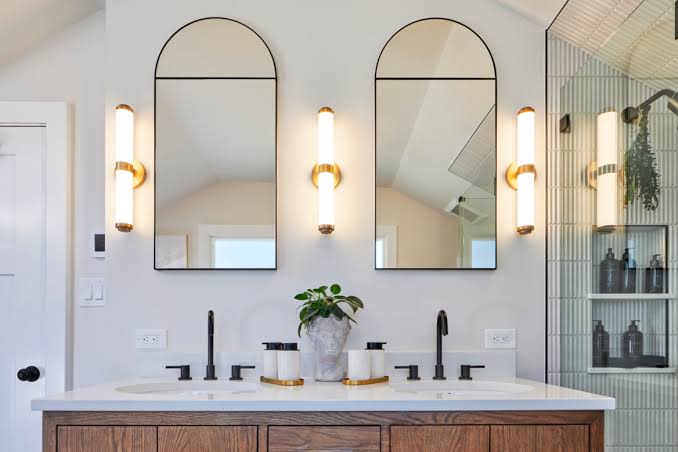
Medicine Cabinets With Mirrors: What to Look for Before You Buy
A bathroom renovation almost always starts with the same short list: vanity, mirror, storage. Medicine cabinets with mirrors solve two of those three problems at once, which is part of why they’ve become the default choice in smaller bathrooms where every square foot of wall space matters. But not every mirrored cabinet is built the same way, and the difference between a good one and a mediocre one usually shows up six months after installation, not on day one.
Why the Combination Makes Sense
A standalone mirror and a separate storage cabinet used to be the standard setup. That approach works fine in a large primary bathroom, but it starts to feel wasteful in a powder room or a guest bath where wall space is limited.
Combining the two functions into a single fixture accomplishes a few things at once:
- Frees up wall space that would otherwise go to a second fixture
- Puts everyday items (toothpaste, floss, medication) directly at eye level instead of in a drawer
- Reduces the number of separate purchases and installation points in a renovation
- Creates a cleaner, less cluttered sightline in a small room
The tradeoff is that the cabinet now has to perform two jobs well. A mirror that distorts or a door that doesn’t stay put undermines both functions at once, which is why the build quality matters more here than it would on a purely decorative mirror.
What to Look for Before You Buy
Not every mirrored cabinet on the market is worth the wall space it takes up. A few specifications separate the ones that hold up from the ones that start rattling within a year:
- Hinge type. Soft-close hinges cost more but prevent the slamming and eventual misalignment that cheaper spring hinges develop over time.
- Door seal and hardware. Magnetic door catches keep the cabinet flush against the wall instead of drifting open, which matters in a humid bathroom where wood and composite materials can shift slightly.
- Mirror clarity and edge finishing. Look for beveled or polished edges rather than raw-cut glass, and check that the mirror doesn’t introduce any warping near the frame.
- Depth and shelf configuration. A cabinet under 4 inches deep will feel cramped for anything beyond travel-size toiletries; adjustable glass shelving is worth prioritizing over fixed plastic.
- Construction material. Stainless steel or powder-coated aluminum resists moisture better than untreated MDF, particularly in a bathroom without strong ventilation.
If lighting is part of the equation, an LED-integrated version with a CRI of 90 or higher renders skin tone and color far more accurately than the cool, flat light most vanity fixtures put out. Anti-fog coatings on the mirror surface are also worth the small upcharge if the bathroom doesn’t have an exhaust fan strong enough to clear steam quickly.
Common Mistakes to Avoid
A surprising number of installation regrets come down to decisions made before the cabinet is even mounted. The most frequent ones:
- Mounting height guesswork. Standard vanity height plus roughly 24 inches works for most households, but taller households should measure against the tallest regular user, not the average.
- Ignoring outlet placement. If an electric razor, toothbrush charger, or hair tool needs power near the mirror, the outlet location has to be planned before drywall goes back up, not after.
- Choosing recessed without checking wall depth. A recessed installation looks cleaner but requires enough depth inside the wall cavity to avoid hitting plumbing or electrical runs, which isn’t always obvious from the outside.
- Underestimating door swing. A single door mounted on the wrong side can collide with a light fixture or a shower door in a tight layout; double-door or sliding configurations solve this in narrow bathrooms.
- Skipping the installation guide. Even DIY-friendly cabinets have a specific sequence for leveling and anchoring, and rushing that step is the most common cause of a door that won’t sit flush later.
None of these are difficult to avoid, but they’re easy to miss when a renovation is moving fast and the mirror feels like a minor decision compared to the vanity or tile.
Making the Switch Without Overcomplicating It
For anyone replacing an old builder-grade medicine cabinet, the process is usually more straightforward than expected. A few practical steps make it go smoothly:
- Measure the existing rough opening before shopping, since matching or slightly exceeding it avoids extra drywall work
- Decide between recessed and surface-mount early, since that choice affects both the product search and the wall prep
- Check outlet and switch placement against the new cabinet’s dimensions before demo begins
- Confirm the door swing direction relative to the vanity light and any nearby fixtures
Retailers like Allsumhome carry a range of configurations across these variables, from simple surface-mount models to LED-integrated recessed units with adjustable color temperature, which makes it easier to match a cabinet to an existing layout rather than redesigning the bathroom around it.
The Bottom Line
A mirrored medicine cabinet is one of the few bathroom fixtures that has to be judged on both form and function simultaneously. The mirror needs to render color accurately and stay distortion-free, and the cabinet behind it needs hinges, shelving, and a seal that hold up in a humid environment for years, not months. Spending a little more time comparing hardware specs before purchase, rather than choosing on looks alone, is usually what separates a cabinet that still works well in five years from one that’s already loose on its hinges
