



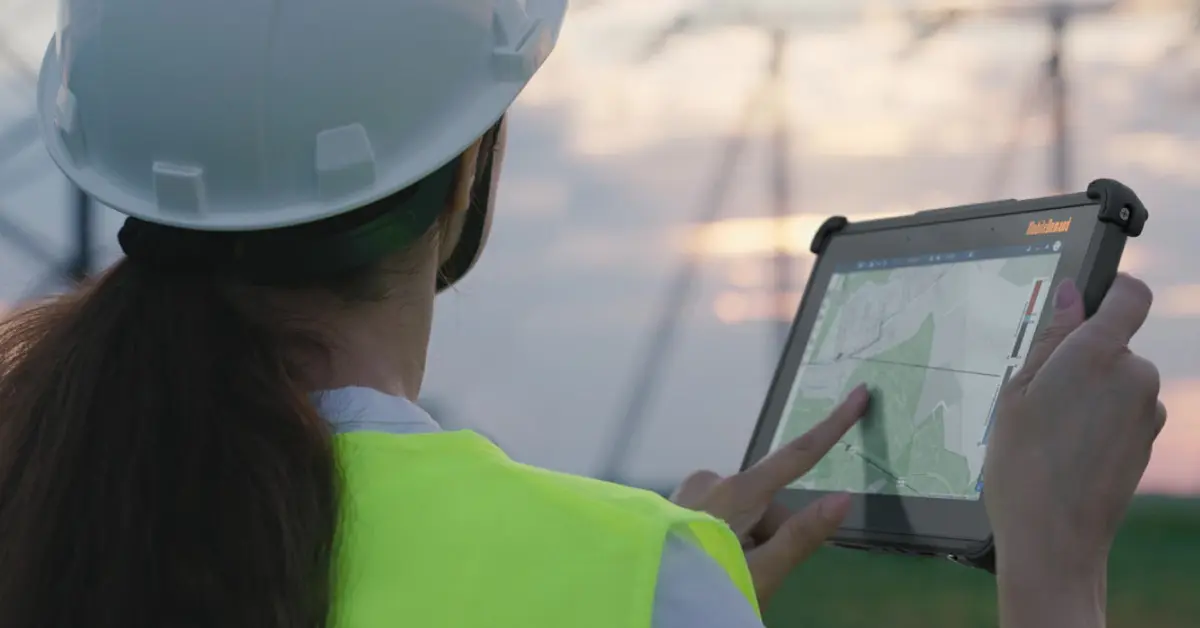
In the current era of industrial digital transformation, the “office” is a fluid concept. For the modern workforce, the desk has been replaced by the driver’s seat of a utility truck, the high-vibration environment of a manufacturing floor, or the unpredictable climate of a remote construction site. As organizations push their data further to the edge, they encounter a significant “fragility gap”—the point where standard consumer electronics fail to meet the physical demands of the real world. To close this gap and maintain operational uptime, the adoption of professional-grade hardware like the panasonic toughbook has become a strategic necessity rather than a luxury. These devices are not merely “reinforced” laptops; they are precision-engineered survival tools designed to ensure that mission-critical data remains accessible in environments where a single hardware failure can result in thousands of dollars in lost productivity or, in the case of emergency services, a compromise in public safety.
The Engineering of Uptime: MIL-STD-810H and Beyond
The primary differentiator of a professional rugged device is its adherence to rigorous military and industrial standards. While a consumer laptop might boast a “sleek” aluminum chassis, it lacks the internal structural reinforcement required to survive the daily rigors of field work.
Ruggedized hardware is built around a magnesium alloy honeycomb chassis, which provides incredible rigidity while remaining lightweight. These devices undergo a battery of tests that would destroy standard hardware, including:
- Drop and Shock Resistance: Testing for repeated drops from heights of up to six feet onto concrete, ensuring the internal solid-state drives and motherboards remain seated and functional.
- Vibration Testing: Crucial for vehicle-mounted applications, where constant engine vibration and road shock can cause standard laptop components to “shake loose” over time.
- Thermal Management: Rugged units utilize advanced heat-piping and fanless designs (in some models) to operate in temperatures ranging from -20°F to 140°F, ensuring the processor doesn’t throttle or shut down during a summer heatwave or an arctic winter.
Ingress Protection: The Shield Against the Elements
Beyond physical impact, the “silent killers” of field hardware are dust and moisture. An Ingress Protection (IP) rating of IP65 or higher is the industry standard for truly ruggedized gear. This rating signifies that the device is completely dust-tight and can withstand low-pressure water jets from any direction.
For a technician working on a telecommunications tower in a rainstorm, or a mining engineer operating in a high-particulate environment, this protection is the difference between completing a task and being sidelined by a “fried” motherboard. By sealing every port with reinforced gaskets and utilizing chemically strengthened glass that repels water, ruggedized systems ensure the user remains productive regardless of the weather forecast.
Total Cost of Ownership (TCO) vs. Initial Investment
Procurement departments often focus on the upfront cost of hardware, but IT leaders understand that the “sticker price” is only one part of the equation. The Total Cost of Ownership (TCO) of a consumer-grade laptop in a field environment is often three to four times higher than its initial price when you factor in the high failure rate.
- Reduced Replacement Cycles: A consumer laptop in a vehicle mount typically lasts 18 to 24 months before a major failure. A ruggedized unit is designed for a 5-to-7-year deployment cycle.
- Productivity Protection: When a device fails in the field, the worker is effectively “offline” until a replacement can be configured and shipped. This downtime is the single largest hidden cost in mobile fleet management.
- Support and Logistics: Managing a fleet of “disposable” hardware creates a constant burden on internal IT teams. Ruggedized hardware offers stability, with long-term spare part availability and consistent software images across years of production.
The Human-Machine Interface in Extreme Conditions
Productivity in the field is also dictated by how well a worker can interact with their device. Standard touchscreens and keyboards often fail in the real world. Professional rugged systems solve this through specialized interface technology.
Sunlight-readable displays with 1,000+ nits of brightness ensure that maps and schematics remain visible even under direct, glaring sun. Furthermore, “glove-touch” and “wet-touch” screen modes allow workers to maintain safety protocols by keeping their protective gear on while inputting data. These technical nuances are what enable a seamless workflow, allowing the technology to fade into the background so the professional can focus on the task at hand.
Security and Future-Proofing the Mobile Workforce
As data becomes more decentralized, the security of that data becomes more vulnerable. Ruggedized laptops integrate hardware-level security that goes beyond simple BIOS passwords. Features like Opal-encrypted SSDs, integrated smart card (CAC/PIV) readers, and Windows Hello-compatible infrared cameras ensure that sensitive company or citizen data remains protected even if the hardware is lost or stolen in the field.
Furthermore, the move toward modularity—where users can swap out “Expansion Areas” for different ports or batteries—means the hardware can evolve with the job. An organization can invest in a platform today and simply swap a module in three years to add 5G connectivity or a thermal imaging camera, significantly extending the life of the initial investment.
Conclusion: A Commitment to Operational Excellence
Ultimately, the transition to rugged mobile computing is a declaration of an organization’s commitment to reliability and excellence. When you equip your team with tools that are as resilient as they are, you eliminate the friction of hardware failure and empower them to perform at their peak. Choosing a partner that understands the intersection of extreme-environment durability and high-performance computing is vital for a successful deployment. For businesses looking to source field-ready, expert-vetted hardware that stands up to the challenges of 2026, Tough Rugged Laptops provides the specialized inventory and technical support required to keep your team moving forward. By investing in the best, you ensure that your organization remains operational, no matter where the job takes you.
